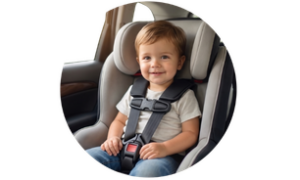
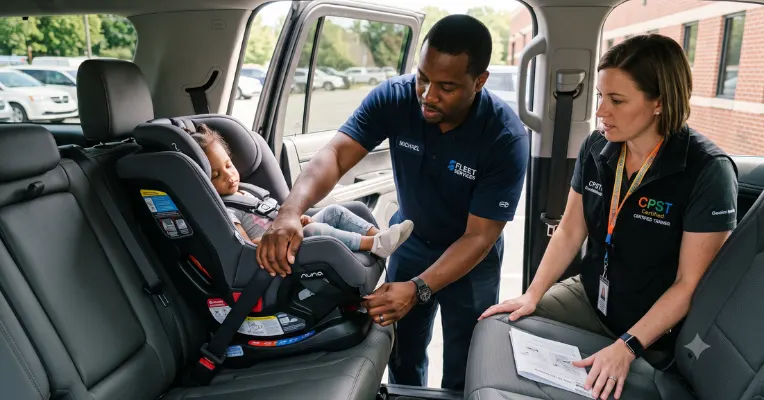
Family travel is already demanding. When parents book a taxi, private car service, or limo with young children, they expect more than a clean vehicle and a polite driver—they need confidence that their child will ride in a properly selected, correctly installed, and age-appropriate restraint. For fleet operators serving airports, vacations, and long-distance trips, that confidence comes from deliberate, ongoing driver training in child passenger safety.
This guide outlines practical best practices for building a family-focused training program. It draws on National Highway Traffic Safety Administration (NHTSA) recommendations, American Academy of Pediatrics (AAP) guidance, and the national Child Passenger Safety Technician (CPST) curriculum. The goal is straightforward: protect children, reduce liability, differentiate your service, and earn the trust of parents who actively seek verified child-safe transportation.
Why Driver Training Matters
Motor vehicle crashes remain a leading cause of death and injury for children. In 2024, 1,032 children ages 14 and under died in traffic crashes in the United States, and an estimated 160,850 were injured. Among child passenger vehicle occupants killed where restraint use was known, a substantial percentage were unrestrained. Properly used car seats dramatically improve outcomes: they reduce the risk of fatal injury by approximately 71% for infants and 54% for toddlers in passenger cars.
Many states exempt traditional taxis and certain for-hire vehicles from child restraint laws, creating a practical and legal gray area. Rideshares are often treated more like private vehicles. Regardless of the letter of the law, physics does not grant exemptions. Unrestrained or improperly restrained children face the same crash forces in a taxi or black car as they do in a family vehicle. NHTSA and safety advocates consistently recommend using an appropriate restraint in every vehicle, including commercial ones.
For fleet operators, strong training delivers multiple returns:
- Lower risk of injury and associated liability
- Higher parent satisfaction and repeat bookings
- Clear differentiation in a competitive market
- Alignment with platforms (such as Child Safe Rides) that prioritize verified, safety-focused providers
Core Best Practices for Training Programs
1. Aim for Certified Child Passenger Safety Technician (CPST) knowledge or equivalent depth
The gold standard is the national CPST certification administered through Safe Kids Worldwide using the NHTSA-standardized curriculum. The course is typically 3–4 days (roughly 32 hours) and combines classroom instruction, hands-on installation practice, skills assessments, and a community car-seat checkup event. Participants must pass written quizzes and demonstrate proper selection, installation, and use of child restraints.
Key topics covered include:
- Types of restraints (rear-facing infant/convertible, forward-facing harness, booster, and when a seat belt alone is appropriate)
- Vehicle seat-belt systems, LATCH, and top-tether use
- Common misuse patterns and how to correct them
- State laws versus best-practice recommendations
- Special considerations (premature infants, children with medical needs, multi-child configurations)
Not every driver needs full CPST certification, but at least one or two designated “safety leads” per fleet should hold it. All drivers who transport children should complete a structured internal program that covers the same core competencies. Recertification or annual refresher training is essential—CPST credentials expire after two years and require continuing education units plus observed seat checks.
2. Teach the stages of child restraint use according to best practice
Follow AAP and NHTSA guidance rather than the legal minimum:
- Keep children rear-facing as long as possible until they reach the maximum height or weight limit of their seat (often well past age 2).
- Move to a forward-facing harness seat and keep the harness as long as the seat allows.
- Transition to a belt-positioning booster until the vehicle lap-and-shoulder belt fits properly (typically when the child reaches about 4 feet 9 inches and is between 8 and 12 years old).
- Require all children under 13 to ride in the back seat.
Drivers should be able to match a child’s approximate age, height, and weight to the correct restraint type available in the vehicle and explain the choice clearly to parents.
3. Establish clear fleet protocols for seats and installation
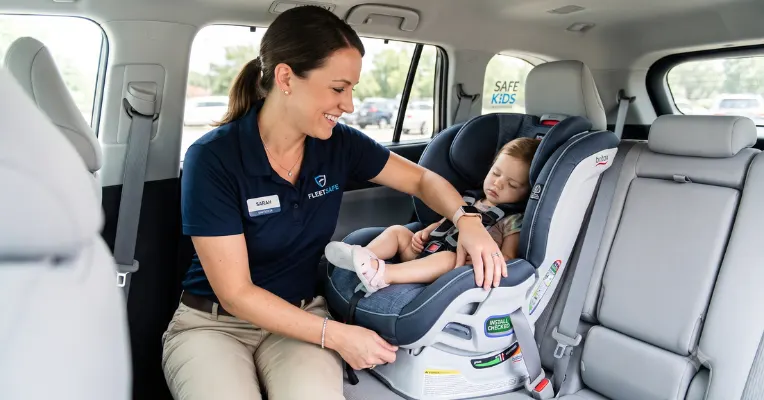
Training is ineffective without supporting systems:
- Maintain an inventory of clean, undamaged, federally certified seats (infant, convertible, and booster) in multiple sizes. Track expiration dates, recalls, and usage cycles.
- Require drivers to verify seat condition and installation before every family pickup. Practice both LATCH and seat-belt installations in the actual fleet vehicles.
- Document the type of seat provided and the child’s approximate size for each trip.
- Create a simple pre-trip checklist that includes harness tightness (the pinch test), correct recline angle for rear-facing seats, and proper booster positioning.
- Train on how to handle parent-provided seats safely and when to decline an unsafe or incompatible restraint.
4. Emphasize communication and parent partnership
Drivers are often the last point of contact before the ride begins. Training should include:
- How to ask about the child’s age, height, and weight without sounding judgmental
- Clear, calm explanations of why a particular seat is being used
- What to do if a parent insists on an unsafe arrangement (politely refuse and document)
- Offering basic education: “Your child is safest rear-facing until they outgrow this seat’s limits.”
Parents appreciate transparency. Drivers who can speak knowledgeably build trust quickly.
5. Cover vehicle-specific and emergency skills
Different vehicles (sedans, SUVs, vans, luxury cars) have different seat-belt geometries and LATCH locations. Practice in the actual fleet models. Include:
- Proper seating positions (never place a rear-facing seat in front of an active airbag)
- Securing multiple children and luggage without compromising restraint use
- Emergency procedures: how to evacuate a child still in a car seat, use of seat-belt cutters if needed, and basic first-aid awareness
- Safe driving habits that protect restrained children (smooth acceleration/braking, proper following distance)
6. Build ongoing education and quality control
One-time training is not enough. Best-practice fleets:
- Schedule annual or semi-annual refreshers
- Conduct random ride-alongs or installation audits
- Maintain records of training completion
- Subscribe to NHTSA and Safe Kids updates on recalls and regulatory changes
- Encourage drivers to attend local car-seat checkup events for continued practice
Implementation Roadmap for Fleet Operators
- Designate a safety coordinator (ideally a CPST).
- Inventory current seats and replace any expired, recalled, or damaged units.
- Enroll key staff in a national CPST course (search the Safe Kids certification calendar or state contacts via NHTSA).
- Develop or adopt an internal curriculum and checklist based on the CPST technician guide.
- Train all relevant drivers and document completion.
- Integrate child-safety language into booking confirmations and driver scripts.
- Review insurance coverage and liability policies with an agent familiar with commercial passenger operations.
- Consider listing on directories such as Child Safe Rides that highlight verified, child-focused providers.
Business and Trust Benefits
Fleets that invest in this training stand out. Parents planning airport transfers or vacation travel actively search for companies that advertise certified seats and trained drivers. Documented training supports marketing claims, improves online reviews, and reduces the chance of preventable incidents. It also positions the company for partnerships and directory listings that value safety verification.
Final Thoughts from ChildSafeRides
Child passenger safety is not a “nice-to-have” add-on for family-oriented fleets—it is a core operational responsibility. When drivers understand how to select, install, and use restraints correctly, and when the fleet supports them with the right equipment and policies, every ride becomes safer. The result is fewer injuries, stronger parent confidence, and a clearer competitive advantage.
Start with the fundamentals: get the right seats, train drivers thoroughly (ideally with CPST-level depth), practice regularly, and communicate openly with families. The children in the back seat—and the parents who trust you with them—deserve nothing less.
This article provides general best-practice guidance based on publicly available NHTSA, AAP, and Safe Kids resources as of 2026. Laws and recommendations can change. Operators should consult current state statutes, insurance advisors, and certified Child Passenger Safety Technicians for specific implementation. Always prioritize manufacturer instructions for both vehicles and child restraints.
For taxi, limo, and car-service operators ready to demonstrate a genuine commitment to child safety, platforms like Child Safe Rides offer a way to connect with families actively seeking verified providers. Proper training is the foundation that makes that connection trustworthy.