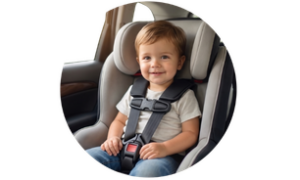
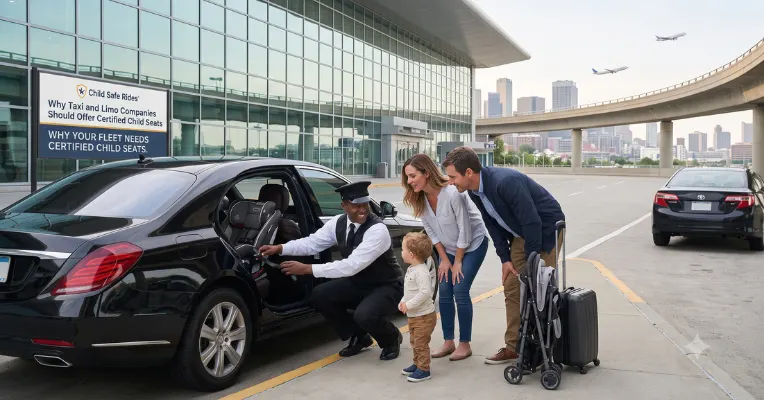
Parents traveling with young children face a recurring dilemma at airports, hotels, and tourist destinations: how to get from point A to point B without risking their child’s safety or hauling bulky car seats through terminals and city streets. For many, the default options—standard taxis, rideshares, or unprepared limos—fall short. Offering certified, properly maintained child seats is no longer just a nice-to-have amenity. It is a practical business decision that improves safety, meets clear parent demand, reduces operational friction, and creates a meaningful competitive edge.
The Safety Imperative
Motor vehicle crashes remain one of the leading causes of death and serious injury for children. Properly used car seats dramatically change the odds. According to NHTSA data, correctly installed car seats reduce the risk of fatal injury by approximately 71% for infants and 54% for toddlers in passenger cars. These protections do not disappear because the vehicle happens to be a taxi or limousine.
Many states exempt licensed taxis (and sometimes other for-hire vehicles) from child restraint laws. The rationale is logistical: fleets cannot reasonably stock every possible seat type for every possible child. Rideshares are often treated more like private vehicles and face stricter expectations. Legal exemptions, however, do not change the physics of a crash. An unrestrained or improperly restrained child experiences the same forces whether the driver is a professional chauffeur or a parent.
NHTSA and the American Academy of Pediatrics consistently recommend age- and size-appropriate restraints in every vehicle, including commercial ones. Companies that provide certified seats and train drivers in correct use close the gap between “legal minimum” and “actual safety.”
Clear Parent Demand and Pain Points
Surveys and observational studies consistently show that parents want better options. Common barriers to proper restraint use in taxis and rideshares include:
- Not having a seat with them (especially after a flight)
- Vehicles not equipped with seats
- Difficulty or time required to install a personal seat at the curb
- Uncertainty about whether a driver will accept or properly install a seat
Parents frequently report transporting children differently—and less safely—in hired vehicles than in their own cars. Holding a child on a lap or relying on an adult seat belt alone remains common when no suitable restraint is available. Airport transfers amplify the problem: families arrive jet-lagged, manage multiple bags, and confront the immediate need for ground transportation.
Companies that eliminate these friction points earn loyalty. Families planning vacations, visiting relatives, or traveling for work actively search for “taxi with car seat,” “airport transfer with infant seat,” or “limo with child seats.” Meeting that search intent converts inquiries into bookings.
Business Advantages of Offering Certified Seats
Differentiation in a crowded market
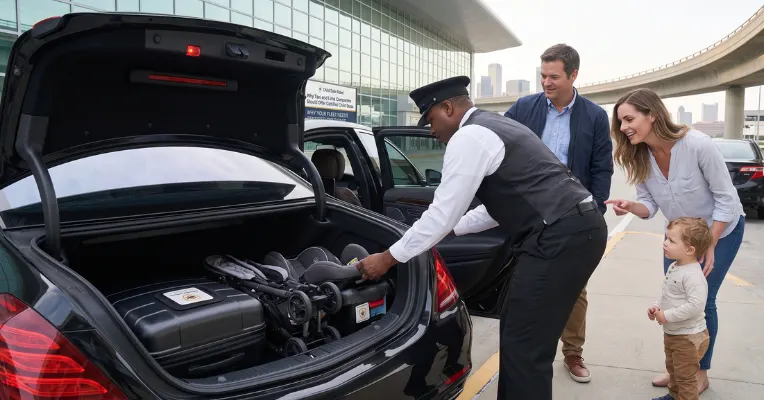
Most traditional taxis and many limos still do not stock child seats as standard equipment. Rideshare platforms offer limited “car seat” options in only a handful of cities, often restricted to forward-facing seats for older toddlers and subject to availability. A fleet that reliably provides infant, convertible, and booster seats—and communicates this clearly—stands out immediately.
Higher-value trips and customer segments
Airport transfers, multi-stop family itineraries, and long-distance rides command premium rates. Parents are willing to pay more for certainty and convenience. Offering seats opens the door to corporate travel managers booking for employees with children, hotel concierges recommending preferred providers, and international visitors who arrive without their own equipment.
Marketing and reputation benefits
Safety-focused messaging resonates. Testimonials from relieved parents, five-star reviews mentioning “the car seats were already installed,” and listings on specialized directories (such as Child Safe Rides) amplify visibility. Verified, trained providers gain an advantage over generic competitors.
Reduced operational friction and potential liability exposure
While providing seats introduces new responsibilities (proper selection, installation, maintenance, and driver training), it also reduces the risk of last-minute refusals, parent frustration, or unsafe improvisations. Documented policies, certified seats that meet FMVSS 213 standards, and trained drivers strengthen a company’s position in the event of an incident. Insurers and risk managers increasingly look favorably on proactive safety programs.
Alignment with evolving expectations
Safety organizations and some jurisdictions continue to push for broader application of child restraint rules. Companies that already operate above the legal minimum are better prepared for future regulatory changes and public expectations.
Practical Considerations for Implementation
Offering seats successfully requires more than buying a few units and storing them in the trunk:
- Maintain a range of certified seats (rear-facing infant/convertible, forward-facing harness, and boosters) in good condition, with tracking for expiration dates and recalls.
- Train drivers on correct selection and installation (ideally drawing on CPST-level knowledge or structured internal curricula).
- Establish clear booking protocols so the right seat is available and pre-installed when possible.
- Keep seats clean and sanitized between uses.
- Communicate the service transparently in marketing, booking confirmations, and driver scripts.
The investment is modest relative to the value of family bookings and the goodwill generated. Many operators start with a core set of seats for their highest-demand vehicles (airport sedans, SUVs, and vans) and expand based on usage data.
The Competitive Reality
Parents already vote with their bookings. When a company advertises reliable child seats and follows through, it captures trips that would otherwise go to competitors—or not happen at all because the family chose a rental car or waited for a more suitable option. In markets with strong airport and tourism traffic, this capability can become a signature service rather than a niche add-on.
Conclusion
Taxi and limo companies exist to move people safely and conveniently. For the growing number of families who travel with young children, “convenient” must include a properly fitted, certified child seat. Legal exemptions may allow operators to skip this step, but safety data, parent behavior, and market opportunity all point in the opposite direction.
Companies that invest in certified seats, driver training, and clear processes protect children, reduce stress for parents, and build a sustainable business advantage. In an industry where trust is currency, offering child seats is one of the clearest ways to earn it.
Operators ready to demonstrate this commitment can strengthen their visibility by listing on platforms dedicated to child-safe transportation. The families searching for safer rides are already looking—they just need to find the companies prepared to deliver.
This article reflects general best-practice guidance based on NHTSA, AAP, and related safety resources available as of 2026. State laws vary and change. Fleet operators should consult current statutes, insurance advisors, and certified Child Passenger Safety Technicians when developing policies and training programs. Always follow the manufacturer instructions for both vehicles and child restraints.